

Tag

parenting

Browsing

As a child who fought more with her two imaginary friends than laughed, I reflect on how real it was for those around me.
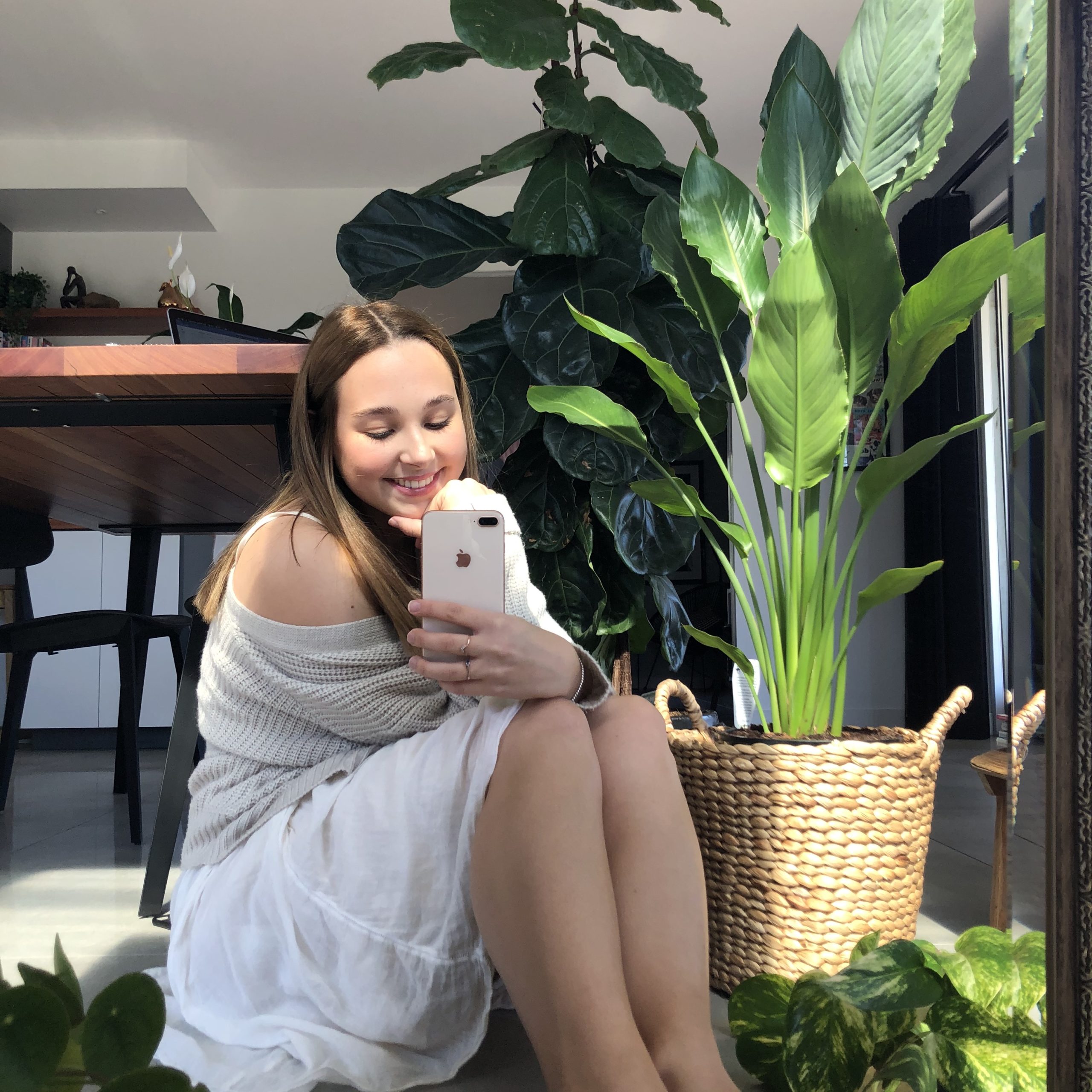
Amelia today as she remembers her childhood companions.

“Alright, that’s it!

Tom and Ellie get out of the car now, you’re not coming back home,” I remember my mum yelling.

It was a casual afternoon in mid-2001, I was two-and-a-half years old and the back seat of our forest green Subaru was filled with three children fighting over the last Twistie. I kicked and screamed, not happy with the designated chip outcome, begging the other children to give it to me.

However, I was the only physical child in the back seat. Tom and Ellie were “invisible” fragments of my imagination. Invisible fragments that I fought with so much, I forced Mum to throw them away.

This day was the tip of the iceberg for my mum, feeling like she was the mother to triplets instead of just me. Throwing these “friends” out of the car seemed like the only way to keep the peace and her sanity intact. She was beyond patient with my constant demands. Making sure these unseen beings were properly bathed, dressed, fed and securely buckled into the car before leaving home.

“It was really draining,” says Mum, when asked to reminisce on this stage of my childhood.

“I would have to give everyone a bath each night and when told I didn’t dry them properly, the process had to start all over again.
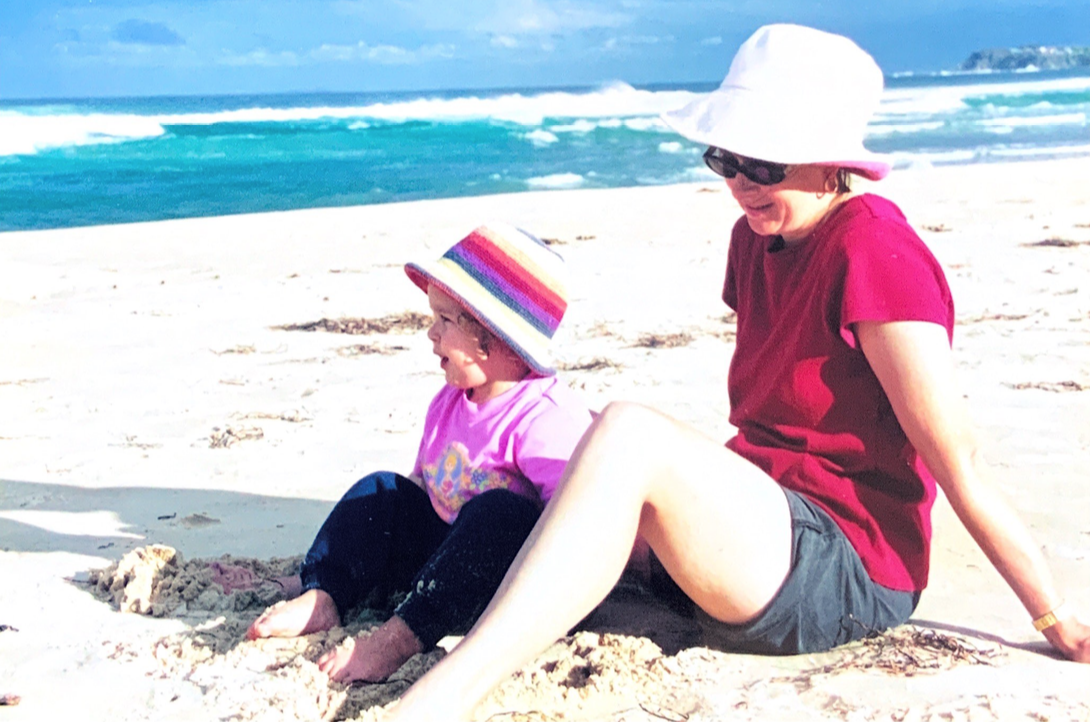
“As a mum, I knew it was my responsibility to remove a problem that was so obviously agitating my daughter, so ultimately that is what made me stop the car that day.”

Fast forward to the present and I cannot tell you what Tom and Ellie looked like, but when I was a child, they were so vivid within my imagination. They kept me company, forcing me to explore social situations at such an early age. There were plenty of times the three of us were the best of friends, but unfortunately, the fighting outweighed the calm. I knew the playmates I was bickering with over toys, food and personal space were fictional characters within this chapter of my life, however, they were still emotionally and intellectually alive.

My make-believe friends were most likely born out of boredom or the fundamental desire for company, as Tom and Ellie emerged into my life before my little sister was born. Even though we all drove mum crazy, these beings allowed my parents to gain an insight into the creations of my inner world. They noticed what made me shriek with both laughter and anger, my likes, dislikes and inventiveness.
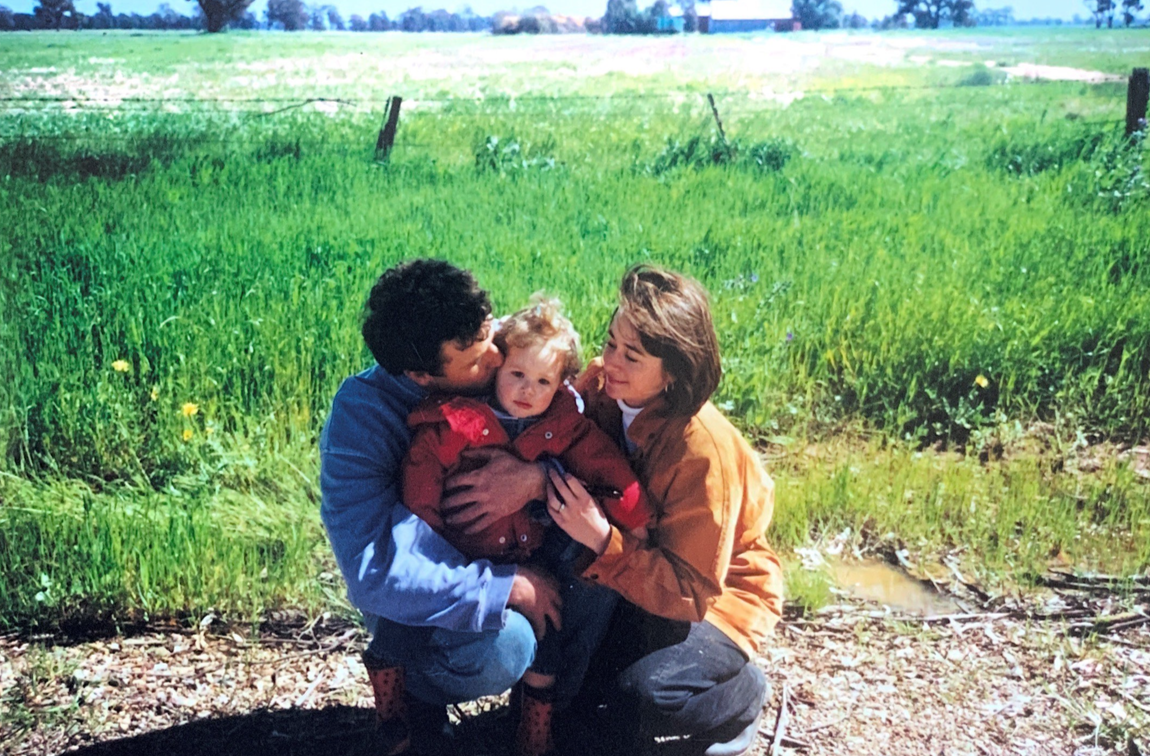
Mum worried I had psychological problems or was meant to be a triplet and had separation anxiety. However, with copious research, she discovered having imaginary friends was a normal part of growing up and developing.

Studies show that imaginary friends are an extremely natural and healthy part of a child’s development. Up to two-thirds of children create make-believe playmates, usually between the ages of three and eight. Dr Psych Mum says these friends are more common amongst firstborn or only children, as they satisfy the need for friendship and companionship, notions in which many only children crave.

The stigma surrounding imaginary friends used to be harsh. Up until the 1990s, people believed they were a psychological red flag, being a sign of loneliness within the child or a reluctance to accept reality. Others also thought these invisible companions were a sign of an evil demonic possession or early signs of mental illness.

However, developmental psychologist Marjorie Taylor said in an interview with The Globe and Mail, that children who manifest these beings grow up to be creative adults, with further links to higher developed social and verbal skills.

Psychologists from all around the world agree children with imaginary confidants – whether that be friends or personified objects – tend to engage more with their peers as they grow up. They also found that these children are more advanced in knowing how to react with imagining how someone else might think and behave in certain situations.

The inclusion of pretend friends within a child’s life fulfils three fundamental psychological needs: competence, relatedness and autonomy. Competence is met by the child assuming a leadership role towards the imaginary friend, an established invisible hierarchy. Relatedness is accomplished by teaching a child ways to connect socially with real-life human beings as they grow older. Autonomy is satisfied by a child gaining a sense of control over their parents, by demanding they complete tasks for their companion.

Imaginary friends inspire children to explore their curiosity in a make-believe world they constructed within their own minds. They provide a sense of comfort, freedom for life lessons and learning curves in the real world.

Looking back and laughing with Mum over these crazy antics with my treasured friends, I am grateful my two-year-old self could invent such precious company. They fulfilled my needs for companionship then, and maybe they fulfil my needs for creativity today.


Gaslighting is a tactic used by someone to psychologically manipulate a victim into doubting their sanity. Gaslighting is a horrific form of abuse and is most commonly seen between intimate partners, but it’s also experienced in parent and child relationships. This is frightening, as usually, a parent isn’t aware of the harmful damage they’re doing to their child’s welfare.

Authors, Damien W. Riggs and Clare Bartholomaeus of a study on gaslighting in parent-child relationships for the Flinders University, Melbourne, say,

“Gaslighting in practice is often subtle and can be difficult to detect, especially in the context of parent-child relationships, where imbalances of power are often a taken-for-granted norm.”

This difficulty in understanding and identifying what gaslighting looks like between a parent-child relationship is why parents are often guilty of unintentionally doing it.

(Image sourced: Pixabay) 

A scenario of what gaslighting can look like, according to 1800RESPECT anonymous counselling services, can be as simple as a mother losing track of time and is now running late to drop their toddler to daycare. It is not the toddler at fault but nonetheless, the mother insists on saying, “We’re going to be late to daycare because you have been mucking around! Quick get in the car now and behave yourself!”

This is a rather common situation in the life of a mother, but according to 1800RESPECT anonymous counselling services, when such words are spoken to a child it positions them to question their actions and teaches them that they’re troublesome and disobedient.

Other ways a parent may unknowingly gaslight their child is by exaggerating conflict. Minor wrong-doings by their child are blown out of proportion. An issue as small as a child lying about brushing their teeth sets the parent off in a way that makes the child question whether there is any sense and logic to their anger.

(Image sourced: Pixabay) 

In response to the parent acting out, the child will start to keep to themselves and steer clear, as they never know what will trigger or infuriate the parent. The child may also begin to start lying to their parent to avoid the constant put-downs, as they feel like they can’t do right by their parent.

Robin Stern, associate research scientist at the Child Study Centre in Yale, identifies these responses in his book,  The Gaslight Effect: How To Spot and Survive Hidden Manipulation Others Use to Control Your Life, as the two warning signs that a victim is being gaslit.

Mocking of your child’s behaviour is a harmful action which is a form of gaslighting. This situation might involve – a child being upset because they want chocolate at the supermarket, but they already have a lolly. The child begins to cry louder because she wants chocolate as well as a lolly, and the parent becomes frustrated by the loud whining in public and mocks the child, “Wah, wah, wah, I want chocolate, but I already got a lolly. Well too bad!”

This humiliates and distresses the child and ultimately, invalidates their feelings.

A parent’s over-assertion of power when their child begins to grow older is another form of gaslighting. When a parent starts to sense their child is making decisions for themselves that they may not agree with, they begin to feel fearful that their kid no longer needs them.

To combat this, a parent might begin to speak poorly about the child’s newly formed school friends by telling them they don’t think they’re “good enough” for them. This sends their child the message that they are helpless without their parent’s guidance. In turn, the child isolates themselves from friends and family.

(Image sourced: Pixabay) 
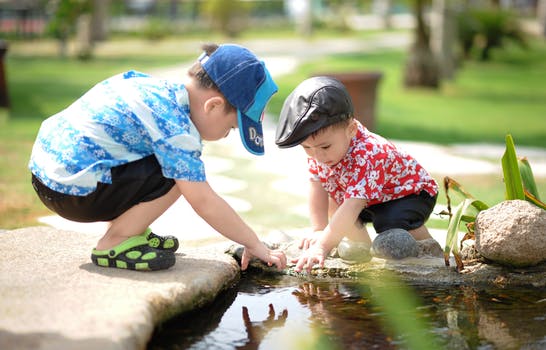
Self-isolation was one of the warning signs that Stern identifies in his book that victims of gaslighting do.

It is important to be educated and aware of what gaslighting can in parent-child relationships in both large and small forms. 1800RESPECT anonymous counselling services say the effects of this psychological abuse leave a child feeling anxious, insecure, and distressed, which causes them to develop both inferiority and trust issues.

Children that are victims of gaslighting at a young age grow up feeling unsure of their place in the world, which subsequently alludes to them questioning themselves, their worth, and their own sanity.

If you or someone you know needs more information or support around gaslighting call – 1800respect counselling services – 1800737732 or visit their website https://www.1800respect.org.au/

Precautions taken by medical staff left new mum, Jess Bowen, feeling traumatised, “diseased” and excluded during her first birthing experience.

 “I felt like I was diseased. The doctor would whisper to the nurse that I should have my mask on like I had the Corona Virus. It felt awful.”

Credit: Jess Bowen

Melbourne mum and hairdresser, Jess Bowen, gave birth to her first baby on the 28th of March this year, when the pandemic was beginning.

“My pregnancy was wonderful. I didn’t have any complications and I was excited to give birth,” shares Jess.

At Jess’s final appointment with her midwife, protein was found in the urine indicating pre-eclampsia, whereupon she was admitted into the hospital and immediately induced.

Jess laughs about not having enough time to gather her things, pack a bag or worst of all, “put on fake tan”.

Being a new mum is stressful without the added pressures of a global crisis. Jess describes her experience at the hospital as “traumatic”. She says the nurses were cold and “on edge with Covid happening. This made them short and abrupt.”

Once admitted, Jess was induced using a Foley Bulb induction, commonly known as the “Balloon Method”, where a Foley catheter is inserted into the cervix and is inflated, with sterilised water or air, over a period of time to help the cervix dilate for birth.

The nurses monitored her during the process by checking her dilation using their fingers. “It felt awful,” Jess recalls. “There’d be no warning. Just enter the room, stick their fingers in and would be disappointed because I wasn’t dilating fast enough. They weren’t reassuring me so it would just make me feel anxious.”

Credit: danielledobson_photographer

Eventually, the doctor arrived to examine her.

“He was really quite abrupt and rude. He basically told me that I had a disease (referencing her pre-eclampsia). I’m a new mum and it’s not really something that I want to hear. He just said I have a disease and we have to get this baby out.”

Jess says at one point she coughed to clear her throat, and the doctor immediately pulled the nurse aside and whispered, “she should have a mask on”.

“It was horrible to hear that. I felt so excluded and was already feeling disgusting from when the doctor called me diseased earlier.”

Jess can’t help but think how her experience may have differed if she wasn’t giving birth during these unprecedented times.

Jess rarely saw the doctor after this. Any interactions from the medical staff were limited until she was ready to deliver. After a day of the Balloon, she had only dilated one centimetre and needed to try another method.

Credit: danielledobson_photographer


Jess speaks highly of her head midwife, Jenny, throughout this process saying, “She was out of this world amazing, overall an experience from having that doctor, she made it so much better.”

She was then induced through the use of Oxytocin, which is a synthetic hormone that is administered through a drip in the arm to start the contractions.

Jess describes these contractions to be the most painful thing she’s ever experienced before.


“Immediately I felt anxious. I felt really depressed. They basically said to me that I needed to try, because at this point, I was feeling deflated and wanted to have a C-section.”

A few hours after starting the Oxytocin, Jess felt a sharp pain to the right of her stomach and had the urge to go to the toilet. The head midwife checked her and told her that she was three centimetres dilated. Jess immediately asked for an epidural, which was a 15-minute wait. During that time, Jess says she dilated 10 centimetres and was ready to deliver.

Jess went into shock and was crying through “the worst pain of her life”.

“Throughout the pushing process, I didn’t opt for any gas or pain relief because I was in such shock. It was a traumatic experience for me with everything that was going on and the treatment of the staff with Covid-19. It was frightening.”

Jess finally gave birth to her beautiful girl, Isla. Fortunately, she had her partner with her through this process.

Credit: danielledobson_photographer

“No one else was allowed to visit me in the hospital and my partner was only allowed during a small time-frame in the day, so during the inducing process and after giving birth, I didn’t have support from my family to get me through this. I just wanted my mum there.”

Hours after Jess gave birth, the nurses continued to monitor her bleeding through a weighing process to ensure there weren’t any further complications. Jess explains being “on a high with adrenaline” throughout this and wasn’t paying attention to the rising concern from the nurses as she surpassed a litre of blood.

After 20 minutes from her last check-up, Jess had sat up and explained the sensation of her “water breaking”. Jess lost 1.8 litres of blood and the head midwife called the surgeon. She recalled nurses accidentally dropping blood on the ground and described her room to be a “murder scene”.

During emergency surgery, Jess says they put a plastic box over her head. “It made me feel really small. The surgeon felt bad about it and was trying to reassure me that it was just protocol with Covid-19.”

After this, Jess was relatively okay. She had spent the last remaining hours after surgery with her partner and her new baby girl, but at 5 AM, her partner was told to leave.

“My partner was annoyed but I was still running on adrenaline, so I was less upset. I was happy and messaging my family about the good news and it was just one of those situations where ‘it is what it is’.”

Credit: Jess Bowen

When Jess was finally able to go home, Victoria’s first round of lockdown’s was in full effect and she spent her first weeks as a mother trapped in her home alone with her partner. Jess was suffering from the baby blues and wasn’t able to lean on her family for help.

“It felt like everything I was doing was wrong. I was barely sleeping, could barely walk because of the blood loss. I just didn’t know what to do. There wasn’t a single day during the six-week lockdown where I didn’t cry.”

Jess speaks about the importance of seeking help. The moment lockdown ended, she went to her psychiatrist and was put on anti-depressant medication.

“No one ever warns you about the way you feel after you give birth. I felt like it was unusual to be experiencing this level of sadness and anxiety when I have the most perfectly healthy baby girl who was gaining weight. Everyone else seemed so happy after their birth that it was hard not to compare myself to them.”

Isla is now five months old and Jess is feeling tremendously better. The lockdown had lifted so that gave her time to introduce her new baby to her family and friends.

“The medication is really helping. I’m starting to feel like myself again and my partner is seeing the improvements too.”

Even though Melbourne has gone back into lockdown again, she’s sad that her family don’t get to see Isla during some significant milestones, she feels much more prepared and stable to tackle what comes next.

On her recent Australian tour, hosted by Maggie Dent, registered child psychologist and founder of Wishing Star Lapointe Developmental Clinic, Dr. Vanessa Lapointe disclosed her ultimate formula for parenting. Offspring shares her advice.

If you’ve ever wished your baby came with an instruction manual, you are not alone. Parenting can be overwhelming and there’s so much conflicting advice it’s hard to know how to best parent your children. Thankfully, Dr. Vanessa Lapointe dispels common myths in her guide to laying a healthy foundation for the baby and toddler years, Parenting Right From the Start. She asserts that there is a way to successfully navigate the struggles of parenthood whilst fostering a sense of wellbeing in your children. It’s all down to a simple parenting formula:

1 – Make sense of who you are

2 –  Understand your child’s needs

3 –  Step in.

Let’s break it down step by step:

1- Making sense of who you are

Dr. Vanessa Lapointe makes it clear that you will parent as you were parented. This means you need to assess your own upbringing and evaluate the parenting patterns that dominated your own childhood.

Typically, these are not comfortable revelations. However, Dr. Lapointe is quick to point out that all parents do the best with the tools they have – in the era in which they were parenting. She argues that most adults these days will have been parented according to ‘behaviourist’ principles.

This way of parenting was focused on manipulating a child into behaving well. This was because ‘good’ behaviour was considered equal to ‘good’ parenting. You can still hear the hangover from this style of parenting in today’s parenting pop culture: How often do you hear, “Good boy” or “Good girl”? Often, strategies such as ‘consequences’ were devised to encourage children to adhere to the rules.

One such strategy is the principle of a time-out. In a time-out, a child is removed from a situation because they are behaving poorly. It’s the equivalent of making a child stand in the corner. The parent does not make eye contact, the parent does not give the child their voice and instead removes all connection. The problem with this model is that the most important thing for a developing child is connection.

Reward charts do not fare much better. Dr Lapointe is quick to point out that a sparkly gold sticker might be great to praise a particular behaviour, but the flip-side is it quickly becomes the ‘not-star chart’ meaning that all other behaviours do not get a star and so the child feels punished.

So traditionally we have coerced our children into ‘behaving’ by removing the one thing they need the most: connection. These old methods do usually get results, at least at first, but Dr. Lapointe cautions that it comes at a cost. To highlight this point, Dr. Lapointe refers to the ‘still face experiment’ where a mother engages with her baby as she would at home, before turning and clearing her face of all emotion. When she turns back to the baby she has a completely ‘still’ face. She has disconnected. It’s not easy to watch. The baby becomes very distressed until the mother re-engages and connects.

Thankfully, Dr Lapointe says, “Now, we know better”.  By understanding and making sense of who we are, we are in a better position to parent differently.

2 – Understand your child’s needs

The second part of the parenting formula involves understanding your child’s individual needs, and not setting the bar too high.  Most children need time to develop and grow. If we choose to rush childhood in order to make our lives easier, it can have a long-lasting negative impact.

Dr. Lapointe highlights our need to grow children who are capable and independent without stopping to consider what is really age appropriate. She likens this rush to pulling on the top of a plant. A plant will not grow faster or better if you are pulling on the top of it; instead this will uproot it and cause damage. It’s the same with child development.

One area that parents are keen to rush (for obvious reasons) is sleep training. Sleep training is a key area of tension, conflict and comparison among new parents. Many new mums find themselves sneaking the cot back into the main bedroom or cuddling their child to sleep every night but feeling guilty that the child will never learn to ‘self-soothe’. Dr Lapointe reassures new mums that being attentive and fostering that intimate relationship with your new baby is absolutely the right thing to do. Babies who feel loved, connected, safe and secure will develop as nature intended and will eventually learn to settle on their own when the conditions are right.

She suggests that sleep training is in fact for adults. It is adults who need to learn to create the right environment for a secure and settled child, everything else will follow on if they have the number one thing that all children need: connection.


All children progress through various stages of brain development as they grow. Psychologist Dr. Gordon Neufeld shines a light on the way children make sense of their relationships and how parents can tune in to support them:

Year One

The attachment relationship is understood in sensory terms: Babies want to taste, touch and smell you.

Year Two

In the second year of life children add to their sense of attachment through sameness. They want to see the similarities between you e.g. Mummy likes apples just like me!

Year Three 

A child makes sense of attachment in their third year through as sense of belonging and loyalty. They are likely to become very possessive at this age e.g “My Mummy!’ A secret handshake and saying, “My boy” or “My girl” will help a child of this age feel connected.

Year Four

This year a child wants to feel significant. They want to feel that they matter.  Typically they will show you every drawing they do, seeking attention and to feel important. Try to give them this attention and stay one step ahead by thinking of ways to show them they are special.

Year Five

The feeling of love truly resonates at this age. Expect lots of drawings of love hearts! Reciprocate this new feeling of love to help your child feel connected to you at this age.

Year Six

Although falling in love with you seems like the most profound connection, in their sixth year they will feel truly known. They understand that every aspect of them (the good, the bad and the ugly) can shine through in the restful knowledge that all will be accepted.

3- Step in.

This is about being the parent. Offspring recently shared a free excerpt from Dr. Lapointe’s new book in which she discusses ‘parental swagger’. This is about being ‘large and in charge’ whilst being respectful of what your child needs you to be in any given moment. Children need to know that you’ve got this.

Dr. Lapointe describes the parenting mountain, where every parent wants to sit at the peak and enjoy the spectacular views.  The problem is that it is easy to slide off of this peak and fall down one of the sides: Either down a bullying, emotionally distant and disconnected slope or conversely down an overly kind, pandering and ‘jellyfish’ slope.

The first slope sees us so determined to enforce rules that we forget to connect with our children. It is the remnants of the behaviourist parenting theories. However, the other side is no better. This side sees you reluctant to maintain control and be in charge, it sees you lacking ‘parental swagger’ and is equally harmful for child development.

What your child needs, at any stage of development, is a balance of both. Everyone has off days but if you can provide an environment where your child feels seen, heard and connected to you then you are on the right track.

Your child needs to be able to lean on you as they navigate their childhood. If you are yelling at them or shaming them for behaviour you don’t like, are they likely to want to lean in to you and to show you their most loving side? No, of course not.

Conversely, if you agree to everything they ask and let them do as they please, are they going to feel that you are strong enough to guide them through life’s challenges? No, they won’t.

So what does parenting ‘right’ really look like?

Let’s use the formula on a real-life scenario:

Imagine your child is having a meltdown in the middle of the supermarket because you won’t let them have a cookie right before dinnertime.

1- Making sense of who you are

In this case you need to check in to understand your response to their meltdown. Are you feeling stressed about the judging eyes of other people around you? Do you feel like you just want to give in to make this behaviour stop so you won’t be embarrassed?

Acknowledging these feelings is the first step in being able to break the cycle so that you can parent better.

2 – Understand your child’s needs

No matter how old your child is, they need to be seen and heard. They need you to get down on their level and calmly tell them that you understand it’s disappointing that they got a ‘no’ when they were hoping for a ‘yes’. Disappointment is a tough emotion to regulate, and they need to learn these skills from you. Acknowledge your child’s emotional response. It’s a normal part of healthy development!

3 – Step in

Now step in with your parental swagger and be the parent. Use your ‘large and in charge’ voice to firmly reiterate that, “No, they cannot have a cookie before dinnertime”. Note that you do not have to justify yourself. Getting into a battle about whether or not they will eat their dinner is starting to have ‘jellyfish’ tendencies and is not helpful. Young children are not at a developmental age to rationalise consequences of eating a cookie now and its impact on their appetite. That’s your job.

Just step in and be the parent.

Cultivate an intimate relationship that is kind, caring and connected whilst maintaining a good degree of parental swagger. Do that most days? You’re getting it right.

Stuck at home with the kids and struggling on how to best use your time together? Drama teacher, Thomasin McCuaig, has created a list of drama activities for you to play with your kids that will educate them, boost their confidence and fuel creativity in this uncertain period.

The spread of COVID-19 is the topic of nearly every conversation. No matter where you go or who you talk to, it is bound to be brought up and add a new layer of uncertainty to your everyday life. With new self-isolation regulations and social distancing precautions, people are going to be feeling more removed from society as the months roll by. Even though the world may seem dire, it is important that we seek human connection during our time at home. Regardless of whether schools close or not, a lot of fun, creative and challenging extracurricular activities are being cancelled, causing kids to be stuck at home and wanting to retreat to their screens. A little screen time is fine, yet it is beneficial to add some balance to the mix by introducing your kids to these fun, challenging and educational drama activities that are sure to spark your kids’ imagination, creativity and lead to new thought processes.

Activities with one kid

Made up Monologue:

Give your kid a pen and a paper and tell them to write a monologue. Monologue is a big word for young ones so remember to let them know what a monologue is! Tell them that ‘mono’ means ‘one,’ so a monologue is a performance where one person expresses their thoughts about a certain topic aloud to an audience. You can tell them that they can be any character they want, e.g. an evil witch, a famous artist, a school student or an inventor. Once they have written their monologue, get them to memorise as much as they can and perform it to the family. Make sure to tell them to demonstrate all the actions in the script so as to make an engaging performance. After this exercise, your kids will feel a sense of accomplishment over what they produced and performed, as they were able to combine literacy skills with drama.

Sell the Product:

Similar to the fun game, ‘Snake Oil,’ get your kid to sell a product to the whole family. They can either find an object at home or create an imaginary product in their head that they have to sell to you. Before they begin, let them know that they have to know the price of the product, the purpose of the product, why it is valuable and where to buy it. If the seller has convinced the buyer, yell at the end of the performance, ‘SOLD!’ This activity is important, as it encourages kids to think practically, whilst using their imagination.

Movement to Music:

Go on your preferred music streaming app and look up a gentle movie soundtrack. The song ‘I’m Forrest… Forrest Gump’ from the Original Motion Picture Score album is the perfect track if you want your kids to create a scene that is magical, sentimental or fantastical. Get your kid to lie down and close their eyes as you play the music for the first time. Tell them to imagine a story that fits the mood of the music, where they are the main character. Then, play the music for a second time and get them to move around the lounge room to the music, telling the same story through movement. This activity is the ultimate creativity stimulator, as it allows kids to truly immerse themselves in their own imaginative world.

Activities with 2 or more kids

Elevator:

This activity is the perfect guessing game for the audience and character-building exercise for the kids. Pick a stage/audience space, most preferably the lounge room. Get your kids to whisper to one another what occupation their character should have e.g. fashion model, police officer, yoga instructor, teacher. The audience cannot know this. Once decided, the kids will move one by one to the centre of the space and pretend to stand in an elevator. When everyone is in the elevator and quiet, an audience member yells, “Elevator is broken!” Those within the elevator have to try and think of ways to fix the elevator and communicate with each other, while giving subtle hints to the audience as to what they do for a living. They cannot overtly say, “I am a mechanic so I can fix this.” They have to be subtle, e.g. a teacher could say, “Oh no, I’m going to be late for class!” An audience member can wrap up the activity by saying “Elevator is fixed!” The actors then step forward so that the audience can guess what each character’s job was.

Make Em’ Laugh:

Test your kids’ focus skills by setting up two chairs in the stage space. The person on the right chair (audience’s right) has to make the person on the left chair laugh. However, they cannot get off the chair or touch the other person. Add a bit of character to the activity by giving them a scenario or situation, e.g. two people stuck on a plane or two people eating at a restaurant. The person on the left has to try their hardest to keep a straight face and not laugh, while still engaging with and responding to the other person. As soon as the person on the left laughs, the actors switch chairs and perform another scene. This game is incredibly enjoyable to watch and perform.

Podcast Play:

Back in the day, radio plays were extremely popular. People sat at home and listened to fictional stories told purely through voice and sound effects. This form of entertainment has shifted into the popular medium of podcasts. Get your kids to create a story where they are only allowed to use voice and sound, as the audience closes their eyes and listens. A fun theme or prompt to give your kids is ‘Haunted House,’ as it allows for various sounds, voices and characters. Your kids can play multiple characters throughout the story and test the different ways in which they can use their voice. For example, one kid could be an evil witch, an owl and scared intruder at different times. Tell the kids to include sound effects and use either their voice or objects around them, e.g. if someone opens a door, they can make the sound of a slow creaking door with their voice or if they are making footsteps, they can create the sound with their feet on the floor. This activity is perfect for developing your child’s creativity and imagination. To make it more fun, record the audio on your phone and play it back to them so that they can hear what they created!

This is intellectual property of Thomasin McCuaig.

Ari takes inspiration from her own childhood when planning school holidays for her child.

Okay, so now that I’m a mother, I can see the flawed and horrible logic that is the summer School Holidays.

SO LONG! Why so long? And why so sunny? Not only do the weeks last forever, each day seems like about ten days because the sun never goes down so you can’t do the old, it’s-dark-now-so-go-to-bed-and-leave-me-in-peace trick until about 9.00pm. Gruesome. Badly planned. Too hot. Whoever decides on these things needs a couple of mothers on the committee to arrange things properly.

When I was a kid, I loved Summer Hols, even though they mostly consisted of going to swimming lessons. I mean, there were a LOT of lessons and they kinda sucked. We didn’t get merit certificates for putting our heads under the water, or anything like that. No, me and my three siblings used to front up to the fifty metre non-solar-heated pool and some Old Boiler would make us fling ourselves into the lap-lane and bitch at us about our stroke. Every. Single. Day. I joke not. The only day we didn’t go was Sunday, and that’s because we had to go to church. My folks liked structure.

All of us kids were at different swimming levels and each lesson lasted about an hour – no pithy 25 minutes in a heated pool for us – so we had to hang around the local pool for about five hours by the time we got through everyone. In between lessons my mother, who engineered the annual Swimming Lesson Bonanza, would instruct us to do about a million more laps for ‘practise’, while she leisurely swam about seven lanes away from us pretending, I see in retrospect, that we didn’t belong to her.

Anyway, all that lapping took us through to about 2.00pm every day, and after five hours of swimming in waters that felt sub-Arctic, we had a lot of our collective Energizer Bunny burnt out of us. Basically that meant we were too tired to whinge and fight at the level we were accustomed to. Plus, we were starving.

My mother is a wily woman, non? She was deliberately, and delightedly, onto something and, now that I am a harried veteran of School Hols myself, I can see she utilised this strategy shamelessly throughout my childhood.

Summer hols meant overdosing on swimming lessons and Old Boilers brandishing megaphones but I think our winter holidays were worse. In winter, we’d take a trip down to Bluff Knoll and have to climb the mountain pretty much constantly. Once was never enough.

I, personally, do not understand the point of mountain climbing. I know there is a point and people feel all I’ve-Conquered-The-Mountain kind of thing when they’ve slogged up the rock face and are standing at the top, but I am quite happy for the mountain to conquer me. The mountain can win and I am MORE THAN OKAY with that. There. I said it. Go mountain. Victory is yours. Unfortunately, my folks are conquering types so I have actually conquered Bluff Knoll – miserably and without grace – more times than I care to recall. Sorry ‘bout that mountain. Won’t happen again.

If we didn’t climb the mountain, we’d go on long bush walks – like six hours or something – with an apple and a vegemite roll for sustenance, and only one another for company. I am not sure why. My parents thought this kind of thing was Fun With A Capital F. I mean, they really dug stumbling along some bush track for hours playing ‘I Spy’ for kicks. There’s only so many times you can Spy a Tree, if you know what I’m saying.

And being winter it rained quite a bit. Basically it rained whenever we had to do a Challenging Outdoor Activity, which was every day. It did not matter if there were fecking hail stones the size of golf balls – we still went mountain climbing or roaming around in the wilderness. My mother packed an odd assortment of raincoats for such weather and flung them happily at us, along with random too-big gumboots, and off we went.

We did complain to our parents, of course. I might have, ahem, complained more than anyone else but they took precisely zero notice and we still had to do these God-awful Extreme Sport like holidays, except we didn’t look cool like they do in Extreme Sport commercials, we just looked random and mis-matched, dodging hailstones in our weird raincoats.

So anyway, this School Hols we had a few weeks of the child bouncing-off-the-walls and me and the other half were starting to get a bit desperate and tetchy. The days were sunny and hot and, above all, long. So, so long.

“I have the solution,” I said, one morning after trying and failing to persuade the child to bounce on the trampoline in the broiling son without Mummy.

The other half raised an eyebrow.

“He needs to know how to swim better than he does,” I gabbled. “Much, MUCH better. We need to book him into swimming lessons EVERY DAY for the rest of the holidays RIGHT NOW.”

I grabbed my phone and started dialling swim schools and, gosh darn it, I did not stop dialling until someone told me they would take him the very next day. Huzzah!

And so he went. And he put his head under the water and blew bubbles and stuff. And he got a merit certificate and a colouring in book and lots of high fives. Unfortunately, it seems Old Boilers are now extinct, but he still got tired-ish. Sort of.

Next hols, I’ve decided that we’re off to Bluff Knoll. I plan to nominate myself for tea duty, while my husband and son conquer the mountain.

When you think of family, what comes to mind? Do you think of your parents? Your own children? Siblings or cousins? Family can mean blood ties, but it can also be the people that you choose, something that you build, and can be defined in terms of the people you love and who you know will love you no matter what.

When people think of family they don’t usually think of foster care. But children and young people in foster care can be in the most desperate need of love and acceptance – the things we usually find in our families. Children enter foster care through no fault of their own, simply because their birth family is unable to look after them.

In NSW there are over 20,000 children and young people in need of care, but fewer than 13,500 households authorised to provide it.

Stretch-A-Family is a Sydney-based foster care agency that’s always looking for new foster carers to keep up with this need. They provide full training and ongoing support to all their foster carers.

“Biology doesn’t really come to mind when I think of family,” says Paula*, a foster carer with Stretch-A-Family. She cares for her 5-year-old biological daughter, Emma*, and 18-month-old foster son, Will*.

“I asked my daughter what family means to her and she said being kind to each other and loving each other,” says Paula. “Emma has loved Will ever since she laid eyes on him. They play and laugh together and have their own way of communicating. She tells everyone that he’s her brother.”

Some people worry they could not love a child that was not their own, but the experience of countless foster carers shows that it is love that makes a family. Some people worry that they would get ‘too attached’ to be able foster but, paradoxically, that is exactly what children in foster care need!

They need to learn how to attach, they need that connection, they need to know they are loved and accepted. For an adult, knowing that a child may only be in your care for a while can be scary, but imagine being a child and not knowing if anybody loves you?

Foster care is about doing the best thing by the child – loving them – no matter how long they are in your care.

“What I love about being a foster carer is knowing that I’m making a difference in Will’s life,” says Paula. “It’s also shaped my and Emma’s perspectives in a positive way. She’s learnt that not all kids have stable homes and has built an understanding of the world outside herself.”

Could you broaden your definition of family wide enough to open your heart and home to a vulnerable child?

There are different kinds of foster care, and there is a type to fit in with your lifestyle and household commitments. Some children stay in foster care for only a few weeks until extended family can be located to take care of them. Some children stay in foster care till they are 18 and become independent. And some children in foster care can be adopted by their carers to become legally part of a new family.

Stretch-A-Family is happy to help you think through what the best option would be for you and your family. If you have a spare room, and the willingness to help, their team would love to hear from you!

Find out more today, or give Stretch-A-Family a call during office hours on 9569 6933

*Names & picture have been changed to protect privacy

This week Australians all took a deep breath in unison and read the news no one was prepared to see, a decision that is more fitting for a Hollywood drama then for real life, a decision that has left survivors reeling and parents holding their children a bit tighter than usual.

The seven judges of the high court have handed down what might be one of the most controversial decisions Australia has ever witnessed. Their decision, convicted and jailed child molester George Pell is to be released and all convictions dismissed, finishing off a series of events that started fifty years ago.

It is every parent’s worst nightmare, a predator walking the streets ready to prey on your child, made even worse by the fact that the alleged perpetrator is a Cardinal, a high-ranking priest in the Catholic Church, elected by the Pope himself.

The Cardinal in question is the soon to be infamous Cardinal George Pell, aged 78, who was accused of molesting two choir boys in 1996 whilst he was appointed as Archbishop of Melbourne.

The crime allegedly took place as Pell found the boys drinking wine in the church, innocently playing around after mass. The account of the Cardinal looming over them before he attacked the boys and forced them to perform oral sex on him is nothing short of an act of evil and that of nightmares.
The rapes and molestation allegedly occurred in the St Patrick’s Cathedral, located in East Melbourne, and is one accusation amongst many made against Pell, numerous of which stem from his time as a younger priest in the small Victorian town of Ballarat in the 1970s.
Of the two choir boys involved in the accusations from 1996, only one survives, one dying of a heroin overdose in 2014 and refusing the abuse allegations up until his death. In the same year the Victorian Government created a task force dedicated to investigating the handling of child abuse cases by ‘Religious And Other Non-Government Organisations’.

In 2015 the surviving choir boy broke his silence, letting go of the secret he had carried for nearly two decades. One can only imagine the weight this man had carried into adulthood, scared of judgement and sharing his secret with the world, all to not be believed.

Three years later in December of 2018 Pell, who had pled not guilty, was found to be guilty of the accusations against him in the Melbourne case of the choir boys, charged with five sex abuse convictions in total.

Since then the Cardinal’s lawyers have faced the high court, arguing that the court failed to adequately take evidence supporting Pell’s innocence into consideration.

On April 7th 2020, after spending just a mere 400 days in prison, Pell has been set free, just in time to spend Easter in the free world.

Amongst the turmoil the world is facing at the moment, yesterday’s news from the high court has left Australia in shock, with the question on everybody lips the same; how?

If a high-profile case can have the ending that Pell’s has, then what chance do the everyday equivalents have. The George Pell’s who hide in our local shadows, in our schools, our churches, our family trees.

The #Metoo movement has given survivors of sexual assault worldwide a group consciousness, hope that if we just stand up we must be believed, that the reason why these monsters have been allowed to walk our streets is a mistake, that if their crimes had been reported they would be locked away.The man who killed Sunshine coast boy Daniel Morcombe in 2003, Brett Peter Cowan, had viciously assaulted seven year old boy Timothy Nicholls in 1987. Cowan served a little over half of his sentence of two years for the brutal rape of Timothy, before being released and eventually finding his way to that bus stop next to Daniel in 2003.

Daniel’s parents must stare at their ceiling at night wondering what if, what if he had served his full sentence, what if he had been sentenced to life, what if, what if, what if.

The pain of all survivors, of the choir boy, Timothy Nicholls, of all people who have been affected by child abuse, who have been brave enough to speak up, for their abuser to be able to walk free is a pain that is immeasurable, leaving a community once hopeful for change and justice, vulnerable and disappointed.

If we didn’t believe the choir boy, then who has a chance?


I have a son called Jackson, and Jackson is an entrepreneur.

– A letter from a father to his son.

Jack came up with his first business idea when he was about 4 years old. We have a massive macadamia nut tree in the back yard. He knew macadamia nuts were expensive but what he didn’t know is that they are so damn expensive because they are so damn hard to get out of the shell.

But that didn’t stop him – so one day he collected about 60 or so nuts. He put 5 nuts each into a small paper bag and wrote $2.00 on each bag. He then put the paper bags into his little red wagon and took off by himself going door to door selling his nuts to the neighbours. He came back in about 20 minutes with $24.00 and no nuts.

One business idea led to another. His big break came when he was about 14 years old – selling waterproof iPhone covers. He shipped in hundreds of these covers for about $5.00 each and sold them on eBay for $30.00.

He water tested each one and he was making thousands!

I would come home and there would be a new PlayStation 4 on the table, an Apple computer or there would be a couple of technicians putting up a plasma TV on his bedroom wall.

His big thing though is making his own rockets. He researches and builds his own jet propulsion systems and makes rocket fuel from fermented potatoes.

One of the ingredients he needs for rocket smoke is potassium nitrate. He managed to find some online one time and shouted out from his laboratory one night, “Dad, we need to go meet this guy!”

Being the supportive parent that I am, I’m like, “OK.”

So I find myself standing in a Burger King carpark in the middle of the night handing over some cash to a stranger in exchange for a plastic bag full of a white powdery substance.

The things you do for your kids.

I find myself standing in a Burger King car-park in the middle of the night handing over some cash to a stranger in exchange for a plastic bag full of a white powdery substance.

Apart from being a great entrepreneur, Jack has an amazing generous and loving nature. He was happy to be the only 16 year old at a 4 year old‘s  birthday party after he was invited by a boy next door. He is the type of person who would line up at 7:00am to get the toilet paper, only to give it to someone more needy once he walked out. He does anything you ask and is happy to do it. He is one of a kind.


On August 11 2016 I was coming back from a business trip in Coffs Harbour.  I phoned Jack at about 4:50pm. He was in his laboratory and we had the usual conversation about dinner:

“What do you want for dinner Jack?”

“I don’t know, what about you?”

“Don’t mind.”

“You want take away?”

“Sure, if you do?”

“OK. What do you want?”

“Don’t mind. You?”

“I’m easy…”


40 minutes later I received another phone call. Not so good this time. Jack was in hospital and in bad shape. Although I didn’t know it, I instinctively knew. I calmly asked, “Suicide?”

The officer said yes. And a few days later Jack passed away.

It was short and sharp and sudden and totally unexpected.

I calmly asked, “Suicide?”

How has this affected me? Time helps. And I know you have to make every moment count. I get up early. I do something straight away. I embrace the day as you never know what tomorrow will bring. I find I complain less and do more. As that is what Jack wants.

It’s hard, but you need to keep living.

Jacks business name is “Vaknisa.” If you google this the only thing that pops up is Jacks name (spelt in German as this is Jack’s preference) and a link to his video play lists (or at least it used to).

The first one on the list is a science video about electricity entitled: “It’s not the volts that kill you, it’s the amps.”

I would like to think there is something profound in this statement. That the message is you can go out and do thousands of amazing and adventurous things and most of the time they won’t hurt you. But one thing just might. But you don’t know what that one thing is – so just live. Take the risk. The only things in life we regret are the risks we didn’t take. There is nothing to be afraid of.

Some people say I don’t know how you cope or how you keep going. And I say: It’s the love that keeps you going. It’s the love that keeps you connected. Grief is knowing that person is still around you, but you can’t see them or hear them or touch them. That is the love that keeps you and them alive. And Jack is alive. He may not physically be with us but to me, he is more alive than he has ever been. He lives in everything that I see, touch, and feel.

And that is why I will never say I had a son called Jackson. I will always say I have a son called Jackson.

Happy 21st Jacky. Love you xx

If you or a loved one is experiencing feelings of depression, suicide or need someone to talk to, you are not alone. Contact Lifeline Australia on 13 11 14.

An edited excerpt from Canadian psychologist Dr Vanessa Lapointe’s new book, Parenting Right from the Start: Laying a Healthy Foundation in the Baby and Toddler Years. Dr Lapointe is touring Australia in March 2020 running seminars based on her book in Perth, Sydney, Brisbane and Melbourne, hosted by Maggie Dent.

My youngest sister recently got married. She has a six-year-old bonus daughter from her husband’s first marriage. Lucky me, I was assigned hair and tiara-positioning duty for sweet little Chelsea on the day of the wedding. This is possibly the best thing you could ever ask of me (as the mom of two boys, I never get to do that sort of thing in my home!).

I have an unwavering belief in a couple of things: first, I know I have big swagger as an auntie; and second, I am a rock star when it comes to hair and makeup and, of course, tiaras.

So it didn’t faze me when my sister said, “By the way, she hates having her hair done. I can never get near it with a brush. Good luck!”

On the morning of the wedding Chelsea was dropped off, and she and I began prepping and primping. So little did it concern me that she hates having her hair done that I forgot about my sister’s warning. I had no worries that this wasn’t going to go well.

I didn’t say things like “What do you want me to do with your hair,” or “What colour of elastic do you want me to use,” or “You just let me know if I’m pulling too hard.”

If you read carefully between the words of those statements, you can sense hesitation and deference.

Instead, I said things like, “I know exactly what is going to be perfect for your hair,” and “Pink or blue elastic, my love?” and “That was a little ouch, but here we go, I’ve got you.” Chelsea sat there and loved it. Why? Because I had no self-doubt about how this was going to happen.

That is swagger. That is being large and in charge, and never losing touch with kindness.

Later in the evening one of Chelsea’s cousins bumped into her as they were playing around, and her tiara was knocked askew. Chelsea burst into tears and a frantic groomsman came rushing over to my table to let me know they were having a tiara emergency.

I scooched over to see her while she was in meltdown mode. Crouching down, I was already saying things that would let her feel heard, because that’s what big people do when they are truly kind and in charge.

They don’t minimize or brush off. They step in and see and hear with swiftness and certainty

I said things that stated the obvious, but I said them with compassion—such as, “Oh love, your tiara got knocked” and, as she raged on about her awful, mean cousin, “You don’t like it when he makes your tiara go sideways,” and “That made you really upset,” and “Of course you are angry.”

Then I started to walk her through the meltdown: “You can be angry. You are allowed. That makes perfect sense,” and “I am right here. I know what we will do. I have extra hairpins with me, and I am going to get it sorted out.”

Within a minute Chelsea’s tears stopped. I settled the tiara into place and told her she was gorgeous.

A smile replaced her anger, and she darted off to find the cousin that she really likes.

I stood up to walk back to my seat and happened to catch the gobsmacked expression on that groomsman’s face. As I walked away I heard him say, “That was amazing!”

You know what that is? That is swagger. That is being large and in charge.

This is a small-scale example of what kind of energy backs the sort of big person who is full of confidence in guiding their child through life.

Your challenge as a parent is to find it within you to bring that sort of energy to the moment-by-moment reality of your little person’s everyday world.