Author

Kate Durack

Browsing

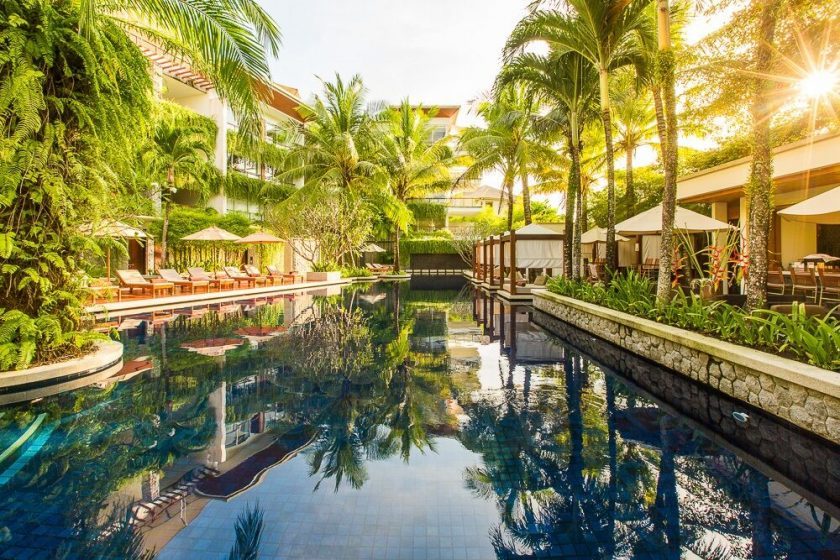
The Chava is a quiet, relaxing and intimate resort that is ideal for families wanting a safe, comfortable and friendly getaway in Phuket.

Luxury at The Chava Resort

“The accommodation was magnificent. We stayed in a 2-bedroom suite which was luxurious and huge!”

The Chava Resort is a gorgeous boutique hotel on Surin Beach, Phuket, which offers an intimate, friendly feel, making it very suitable for families.

I particularly noticed how warm and friendly the staff were. They provided a lovely, personalised experience.

The free-flowing pool was a great hub to hang out and relax with the family. The food was sensational, and dining was ambient, around the lush tropical pool setting.

The menu was not limited by the hotel’s relative size; the range of dishes on offer was extensive and a very high quality.

We sampled a range of delectable items from the restaurant, including a tasty seafood basket and the local, Thai signature dishes. It was all fresh and extremely flavoursome.

I enjoyed a fantastic Thai massage in the comfort of my bedroom, which was great as the kids watched TV while I could properly relax, since travelling on my own with the children restricts the opportunity to venture out of the hotel alone.   

The accommodation was magnificent. We stayed in a 2-bedroom suite which was luxurious and huge!

The suite took up a generous 160 square metres of floor space, which included two large bedrooms, two generous bathrooms, including a massive bath, a large flowing living, dining space and open plan self-contained kitchen.

Many families like to have chefs come into their room to prepare a meal for them in the comfort of their own living space which is a fun and novel idea, and the kitchen and living space cater well for this.

There were three TVs – one in each of the bedrooms and another in the lounge area.

The living space also offers a large balcony with an entertaining area which overlooks the pool.

https://thechavaresort.com/

Spiritual teacher, healer and medium, Oscar de Souza, shares why we need to acknowledge and nurture our emotions.

Experiencing emotions is our soul’s purpose, according to spiritual mentor and medium, Oscar de Souza. Honouring our emotions can also help us maintain positive relationships and manifest our desires.

We arrive here alone with nothing, and we leave alone with nothing, except the emotions we acquire, says Oscar de Souza, speaking from the Spirit Energy Centre on NSW’s Central Coast.

Acknowledging our emotions prevents us from offloading them onto others, especially our children and partners, and subsequently them rippling through society

Most excitingly, working with our emotions, rather than ignoring them, helps us manifest what we truly desire.

Despite the importance of valuing our emotions, Western society teaches us to disregard them, and worse, to feel ashamed for having them, which is not something we want to be infiltrating to our children.

The best way we can become attuned to our emotions is to observe ourselves, says Oscar. [Meditation is a great way to develop this skill.]

He says we need to be observant of the emotion that’s resonating within us, rather than being subjected to it controlling us, dominating us, and enticing us to act out.

Oscar’s been told by his guides, “Emotions are variable frequencies of energy operating simultaneously”, which is why some people can feel various emotions at the same time.

Oscar says, “The simplest form to expand the neurological system of the conscious brain to be able to harness, access and be attentive to the energy that resonates within us that’s constantly, forever fluctuating, is to first observe our mind, observe ourselves and not be puppets on a string.”

If we acknowledge our emotions, even understand why we feel that way, and to honour them, we are less likely to be puppeted by them and lash out at others. Unfortunately, those we love are often the first to be hit by our emotional releases.

“Instead of articulating what we’re feeling, we’re often being controlled by what they’re feeling”

Oscar explains a typical household scenario:

“The husband (or wife) comes home stressed. They’re going to be communicating on that level of emotion. We’re not usually observant and noticing these emotions inside. We don’t decide to calm them down or be attentive to them, so we don’t impose them on our children or each other (we don’t impose them consciously, we don’t even know they’re doing it).

“We get home, our own fuse is already at the end of its tether. Perhaps we’ve been treated badly at work, there’s traffic, bills, expenses, and then we have to clean, cook, wash up … it’s all putting you on edge.

“It’s then easy to turn around to your child and say, ‘Turn off that machine!’ or ‘Get off that computer!’

“Now, that child foremostly heard “Bang!”.

“Secondly, the words that were spoken.

“Months later our child speaks to us that way and we wonder why.

“We have just been puppeted by our emotions. We are all guilty of that.

“Everyone gets puppeted, and the problem is we indirectly, and even innocently, jab that pain and stress that we’re feeling onto the other person.

“So, it becomes a virus because that person jabs another person with it and it just swims through society.”

The more we understand our emotions, we’re less likely to be subjugated by them, and will be able to articulate in language by talking about them.

“People don’t want to say to their partner they’re feeling a bit insecure and feel like their energy is no longer connected to them,” Oscar says.

“Rather than asking questions based on this, such as ‘Do you want to do more things in life without me?’ we tend to brew, be fearful, and then start to fish … ‘What did you do today? Who were you with?’ or even go through their phone, which just makes people feel violated.

“Emotions people have shouldn’t control their dialect or behaviour, but moreso be a language to the brain to go this is what’s resonating, let’s attend to it.”

Oscar says it’s even worse for men as they have been conditioned to not feel or show their emotions, “don’t cry, suck it up”. “Poor men innocently have been trapped into a void that is not natural,” he says.

“And women, being intuitive, are hit with a brick wall when they try to broach this. They feel a storm inside, they feel fear, they feel confusion.

“The man’s like, I don’t know what you’re talking about, and it takes a while for them to process.”

Oscar says the consciousness of femininity and the consciousness of masculinity is the concept of Yin and Yang. We all have that in us, whether we are male or female.

Some are slightly off balance, some have more of either.

“Men need to start being more intuitive, talking about their emotions, listening to their inner self, not being just driven by the mind.”

“I can’t say that women now need to start applying the male consciousness because unfortunately 2000 years of male dominance, a patriarchal system, means women have already had to assimilate the masculine consciousness within themselves. But men are yet to assimilate the feminine consciousness within themselves.”

Not only can honouring our emotions be great in maintaining more harmonious relationships and averting the ‘virus’ of offloading onto others, they can help us manifest what we want in our lives.

The effect of our emotions was explored through the water experiments conducted by Japanese author and pseudoscientist, Masuru Emoto, whose work demonstrated how the sentiment of a word, which is energy, can affect the molecular structure of water. Keeping in mind we’re made up of about 78 per cent of water, words said to us can impact us strongly.

“If our thoughts (sentiments) on a piece of paper affects water, imagine we have that thought going over and over in our brain, ‘I’m not good enough, I’m not good enough. Life is shit. Life is shit,’” says Oscar.

People are not only putting that energy back into their whole water aspect and altering the energy there, they’re emitting it into the future, so naturally start to have those experiences; and it’s a vicious cycle.

When we realise the energy that resonates within us, the energy we’re emitting, the thoughts that carry it, we can stop causing that ripple effect.

Affirmations, prayer, spells, incantations, are effective when we feel the word, when we mean it and we say it with sentiment, says Oscar.

If we’re panicking on the inside and reading this word, then fear becomes the dominant emotion.

“The key is, when we do feel afraid, we comfort ourselves, ‘It’s ok, I’m afraid,’ that’s ok,” he says.

“Once we acknowledge it, we can move from there but when we’re fighting against it that it’s not going anywhere, so it helps to acknowledge the fear and where it came from. What experiences have led me to have this fear?

“When we know what caused this, ok it’s failed relationships that make us afraid of falling in love again, for example, it’s not so dominant in our psychology or our energy.”

Oscar advises writing down an affirmation in our own handwriting because our brain will absorb it much better.

We should then read it out aloud at least 20 times with no intention just to read it out so that the wording becomes familiar to the brain, so you know what you’re using.

And then our focus can be feeling each word.

For example, when someone says, “I love you,” it feels different when they really mean it. Quite often we want others to say it, but we rarely look in the mirror and say it to ourselves, it’s quite confrontational. And it’s the most important thing.


A sleep study done either at home, or in a dedicated sleep unit such as St John of God in Murdoch will be able to determine whether a sleep disorder is present.

Sleep disorders are common, affecting about one third of all school-aged children.

Young children’s sleep disorders will likely affect the household’s sleep quality and overall energy levels.

Lack of good quality sleep in children or adolescents may impact growth, school performance, memory, mood and behaviour.

How do I know my child has a sleep disorder?

– Difficulty settling into sleep at a reasonable bedtime

– Waking often during the night (older than two years) or excessive restlessness

– Tired upon waking

– Loud snoring, gasping or difficulty breathing

– Morning headaches

A sleep study in a dedicated sleep unit such as St John of God in Murdoch will be able to determine whether a sleep disorder is present.

What are the most common sleep disorders?

Obstructive Sleep Apnea Syndrome:

Enlarged tonsils and adenoids can cause snoring or breathing difficulties by blocking airways.

An Ear Nose and Throat specialist can perform a surgical procedure to remove these.

Restless legs syndrome (RLS) / Periodic limb movement disorder (PLMD):

RLS describes discomfort such as tingling or prickling in the legs close to bedtime.

Movement in the legs relieves this temporarily and as such, sufferers will have an irresistible urge to move or walk.

PLMD is a similar movement of the legs but occurs during sleep.

Massaging the legs, a hot bath or an iron level test may help.

Parasomnias:

Parasomnias describe a group of psychological symptoms such as sleep walking or talking, nightmares, or sleep terrors.

This is generally not a concern unless these are a risk to the child’s safety, ongoing or very disruptive.

How much sleep do kids need?

Newborns to 3 months: 14-17 hours

Infants to 12 months: 12-15 hours

1 – 2 years: 11-14 hours

3-5 years: 10-13 hours

6-13 years: 9-11 hours

14-17 years: 8-10 hours

Top tips for kids sleep

From St John of God Murdoch Sleep Medicine and Paediatric specialist Dr Annie O’Donnell

1. Keep regular times for sleeping and waking to regulate the body’s clock

2. Create a bedtime routine that is relaxing, avoiding anything stressful

3. Make the room dark, cool and quiet. If there is noise out of your control, try white noise such as a fan or calming music

4. Invest in some supportive and comfortable bedding

5. Limit daytime naps for older children

6. Get some sunlight in the morning and avoid bright lights at night.

7. No devices or blue light within one hour of bedtime.

8. Ensure kids are getting plenty of physical activity, particularly early in the day.

9. Avoid stimulants such as sugar before bedtime.

10. Don’t let kids go to bed too full or too hungry. Keep mealtimes at least two hours before bed.

What is a sleep study?

Clinical Operations Manager from Murdoch Sleep Unit Simon Kemp said a sleep study (polysomnogram) is an overnight test that monitors sleep and breathing.

“The sleep test uses non-invasive sensors and a routine digital video correlate results with images. There are no needles and no extra medication is given.”

“Most people worry that their night’s sleep won’t be the same as at home, but a sleep unit can usually gather enough sleep data to make a diagnosis.”

Mr Kemp said patients arrive in the late afternoon with one parent or carer.

“Kids are able to bring along any personal items from home and one adult must stay with the child for the duration of the evening,” he says.

“After settling into your private room, small sensors are attached to the skin of the head, chest, finger and legs, enabling precise monitoring of your child’s sleep.”

“These are attached to state of the art equipment that monitors oxygen levels, breathing, brainwave activity, eye and leg movements and heart rate during sleep.”

“A continuous recording of your child’s sleep is created and provides a precise diagnosis of sleep disorders.”

Results of the polysomnogram are then sent to your referring doctor and a treatment plan is put in place.

We stayed at the Howard Johnson Anaheim Hotel and Water Playground which was ideal for our family. It was a short walk to Disneyland (the website said 8 minutes, but it was shorter for us) so we could walk to and from each day at our will. One day our 6-year-old son became overwhelmed with Disneyland, so he and I walked home late afternoon while his sister and dad stayed for the fireworks, and it was very safe and easy to do this, which I liked.

I chatted with other guests staying there who had much younger children and they particularly liked this hotel for its convenience, as they were able to visit Disneyland in the morning and return to the hotel for their children’s nap times, recharge, and then venture back out after lunch.

The hotel was very clean and modern. It seems most of the hotels in the Anaheim region are geared to families to accommodate the Disneyland market, as such I expected them to be well worn but this was not my experience of the Howard Johnson hotel.

The rooms were immaculate – clean, modern and well serviced – including a coffee machine, which I always appreciate.

We stayed in a double room which was spacious, including a family seating area, balcony and bathroom, with both a bath and shower (and fun kids bathroom accessories), which is useful with children.

This hotel is very popular, and family oriented with lovely grassy and treed outdoor areas, a large pool and a separate Pirate themed water playground, Castaway Cove.

The evenings were balmy and light until 8pm when we were there in July, so it was lovely to lay by the pool after a busy day at Disneyland.

There are many local dining options geared to the family market, including competitive pricing and “Kids eat free” options. There are also many delivery options for in-room dining, including tacos, Chinese, pizza, Italian, burgers and fries and more, which really suited us after a hectic day walking around Disneyland.

For more information visit www.hojoanaheim.com

Los Cabos is an ideal travel destination for families, offering excellent food, accommodation and service, great weather, plenty to do and exceptional value.

Los Cabos, situated between the sea and the desert on the Baja California Peninsula in Mexico, is a fantastic choice for families with cultural intrigue, delectable food, year-round sunny weather (it only rains six days a year!), oodles of adventure and a great conversion rate with the Aussie dollar.

Los Cabos is not over-touristed, overdone or overly commercial. It offers great value for holidays and a fun, authentic Mexican experience.

A short plane ride from Los Angeles airport in California,

Los Cabos is the fastest growing resort area in Mexico and is well-catered to the family market with top-quality hotels and adventure activities and delicious, authentic Mexican food.

A highlight for my 6-year-old son and 10-year-old daughter was swimming with dolphins while I loved the Outback and Camel Ride Safari,

which involved a walking tour through the desert where we learnt about the beneficial and toxic properties of various cacti, followed by a camel ride by the sea and a yummy Mexican buffet. We also had fun testing various types of tequila in our jovial group!

These tours were run by Cabo Adventures www.cabo-adventures and were extremely well organised and operated. We also enjoyed a ride out to the famous Arch in Cabo atop, and below the water, in a yellow submarine tour which was a worthwhile experience.

The restaurants were exquisite. We sampled delicious tacos – the fish and prawn tacos were my favourite – at La Lupita www.lalupitatym.com, renowned as being the “best tacos in Los Cabos”, which hosted live music and a very cool, upbeat vibe in a rustic evening hangout.

We spent a lovely afternoon by the sparkling blue ocean at Sur Beach House www.bahiacabo.com/sur, a trendy restaurant set literally on the soft, white sands of Medano beach, which is part of Bahia, a well-recognised hotel in Cabo San Lucas.

This was a very cool place to hang out, relax and eat – gorgeous beach house-inspired décor and a chic but easy feel. I enjoyed a Corona and we dined on seafood and salads, in between taking a dip in the sea, metres in front of the restaurant. Sur Beach House also offered an array of water activities including jet skis, boat rides and stand up paddle board right from its beach front.

Flora Farms www.flora-farms.com was a special experience for the taste buds – all the food is organically grown on their 25-acre farm and the meats come from their 150-acre ranch where animals are raised humanely and sustainably without hormones or antibiotics. [They don’t include beef as there is not enough water in the region.]

They serve only what they make, raise and grow, all handmade on the farm. As a result, it is all exceptionally fresh and tasty. Their Virgin Mary sets a whole new bar!

We saved a yummy pizza for our personal driver, Luis, from Transcabo, who claimed Flora Farms had the best food in Los Cabos.

In addition to the sensational restaurant, Flora Farms facilitates a spa, art classes, cooking classes, events including weddings and has accommodation.

Heralded by The New York Times as the 5th Coolest Restaurant in the World, Sunset Monalisa offers a spectacular dining experience.

Touting the best views Cabo San Lucas sea, Sunset Monalisa masters fine dining, its candlelit, alfresco ambience, imbued with live opera, is difficult to outshine. The restaurant is set on a clifftop, with perfect aspect to watch the magnificent orange sun set over the Mexican horizon, was the Sunset Monalisa www.sunsetmonalisa.com.

Under the orchestration of a Michelin Star-trained chef, the menu offers Mediterranean cuisine, impeccable presentation and romance under the stars.

Los Cabos is definitely a favourite destination for my family and offers exceptional value and fun; for more information visit www.visitloscabos.trave/


Cockatoo Island was a wonderful find – a local adventure for my family.

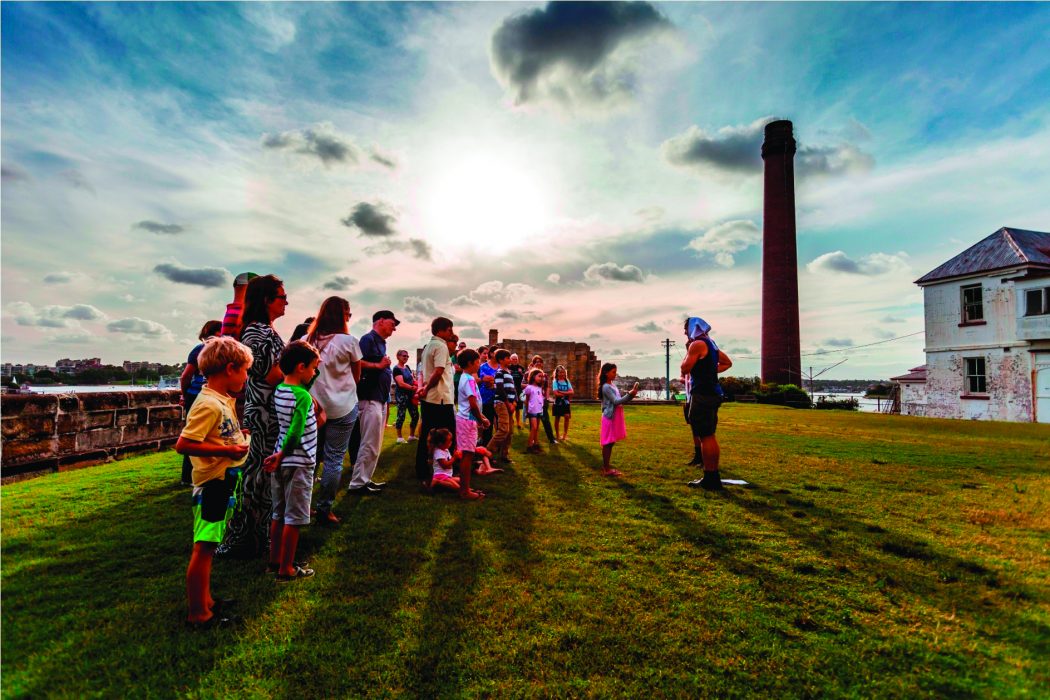
Set in the middle of Sydney Harbour, Cockatoo Island is easy to visit with frequent ferries, yet feels removed from a city environment.

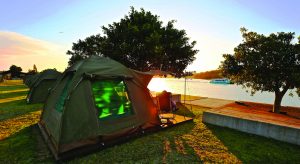
Cockatoo Island is a wonderful, easy getaway for families to experience glamping under the night’s sky. This is so much fun for kids!

Surprisingly, it was a relaxing and tranquil environment, as well as a unique experience in which we learnt about the Island’s rich heritage, having been inscribed on the UNESCO World Heritage List, for its important place in Australia’s colonial development involving aboriginal, convicts and World War II history.

There were fun things to do as a family, including tennis, giant chess and a fascinating audio tour of the Island’s heritage.

But, probably the best part for us was glamping! We hadn’t been camping before (mainly due to my lack of practical resources to make it happen!), so this option was so convenient and enjoyable.

We got cosy in a spacious and kit-out tent, which comprised two separate bedrooms, a family room and and a small outdoor deck. Waterfront.

The beds were comfortable and everything had been thought of including an esky, lamp, snug, holiday chairs and tables.

There is also a cinema experience and opportunity to toast marshmallows by a campfire in traditional camping style.

While this was all great fun, I really relished the stay in their 1916-colonial style apartments. These were so romantic, maintained in sync with the colonial style, yet offered all the conveniences I have become used to – heating and fans, a modern kitchen, TV, lovely BBQ, deck and patio area and loads of space!

Cockatoo Island frequently offers events and exhibitions. For more information visit www.cockatooisland.gov.au/events